Sonya R.
Content Manager
October 6, 2026
5 min
read

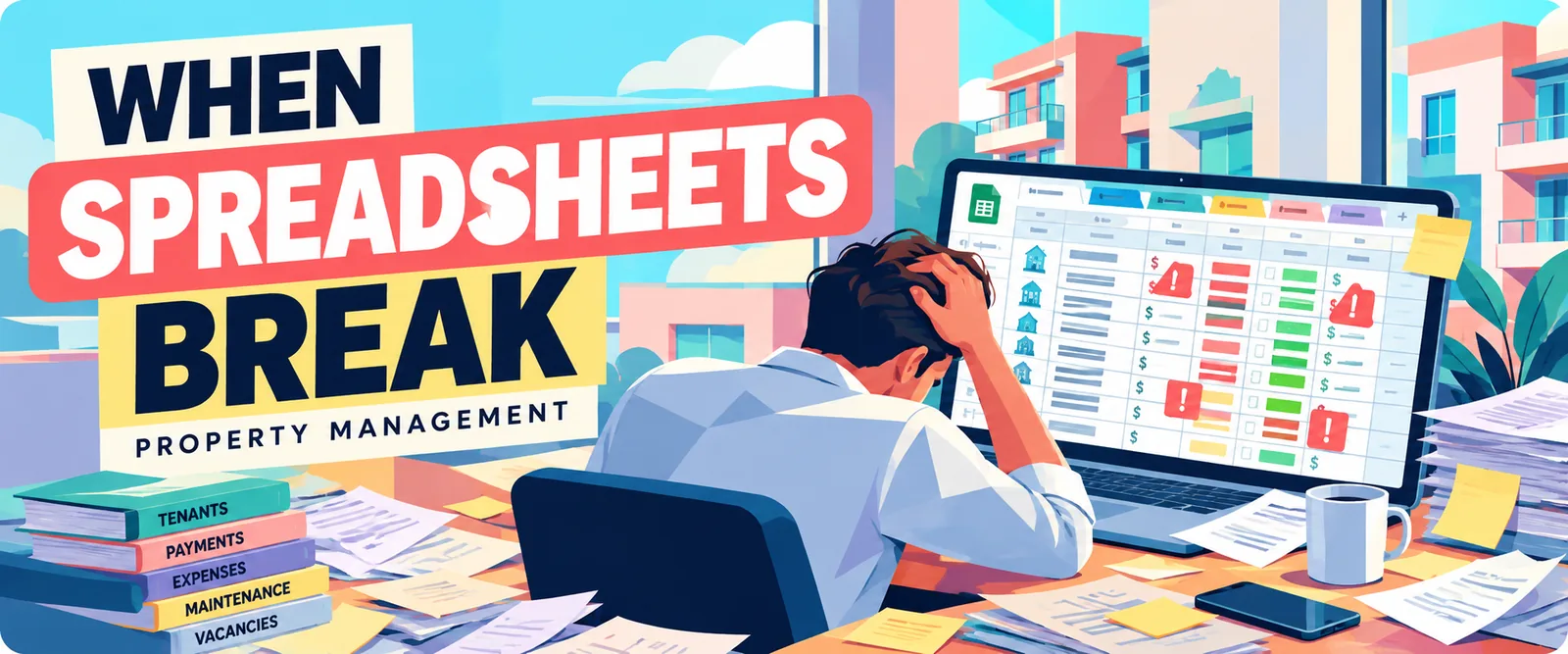
Spreadsheets are one of the most common tools landlords use to manage rental properties.
And for good reason.
They’re flexible, inexpensive, easy to customize, and almost everyone knows how to use them.
If you have one or two rental properties, a spreadsheet may be all you need.
But as your portfolio grows, something changes.
What started as a simple rent tracker slowly becomes a collection of spreadsheets, formulas, tabs, notes, and manual updates that are increasingly difficult to keep accurate.
At some point, you aren't really managing your properties with a spreadsheet anymore.
You're managing a spreadsheet about your properties.
A typical rental spreadsheet might start with a few simple columns:
That works perfectly well when you're managing a handful of properties.
Then you acquire more units.
You add another sheet for expenses. Then another for maintenance. Then another for vacancies. Eventually, you might have separate files for different properties or years.
The more information you add, the harder it becomes to maintain.
And the biggest problem isn't the spreadsheet itself.
It's the manual work required to keep everything updated.
Rent collection is one of the first areas where spreadsheets can become frustrating.
Imagine managing 30 tenants.
Every month, you need to know:
A spreadsheet can store all of this information.
But someone still has to enter it, update it, check it, and make sure nothing was missed.
One forgotten update can make the information you're relying on inaccurate.
A property management system can keep tenant and payment information connected instead of relying on manually maintained rows.
The problem with spreadsheets isn't that they suddenly stop working at 10 or 20 properties.
It's that complexity grows faster than the number of properties.
With a few properties, you might have:
5 properties → 5 tenants → 5 rent payments
With a larger portfolio, you may have:
50 properties → dozens of tenants → hundreds of monthly transactions → expenses → vacancies → payment history
Now you're dealing with relationships between information, not just information itself.
You need to know which tenant belongs to which unit, which payment belongs to which tenant, and which property the unit belongs to.
That's where a dedicated property management system starts becoming more useful than a spreadsheet.
Another problem is human error.
A cell gets overwritten.
A formula gets deleted.
A row gets moved.
Someone enters the wrong amount.
A payment is marked as received when it wasn't.
The spreadsheet may still look perfectly normal.
That's what makes these errors dangerous.
The problem isn't necessarily obvious until you use the information to make a decision.
One of the biggest advantages of spreadsheets is their flexibility.
You can build almost anything you want.
But that's also their biggest weakness.
If you keep adding features to your spreadsheet, eventually you're effectively building your own property management software.
You start creating:
At some point, maintaining the spreadsheet becomes more work than using the system you're trying to replace.
There isn't a magic number of properties where every landlord should switch.
For some landlords, a spreadsheet works perfectly well with 10 properties.
For others, managing 5 properties manually is already frustrating.
A better question is:
How much time are you spending maintaining your system instead of managing your properties?
If you're regularly spending time searching through spreadsheets, updating payment statuses, fixing formulas, reconciling information, or trying to figure out which version of a file is correct, it may be time to consider a dedicated system.
Property management software doesn't need to replace everything you do.
You can still use spreadsheets for analysis, forecasting, budgeting, and custom calculations.
But your day-to-day property information should ideally have a central source of truth.
Your properties, units, tenants, and rent payments should be connected.
That's the approach behind RentDoo.
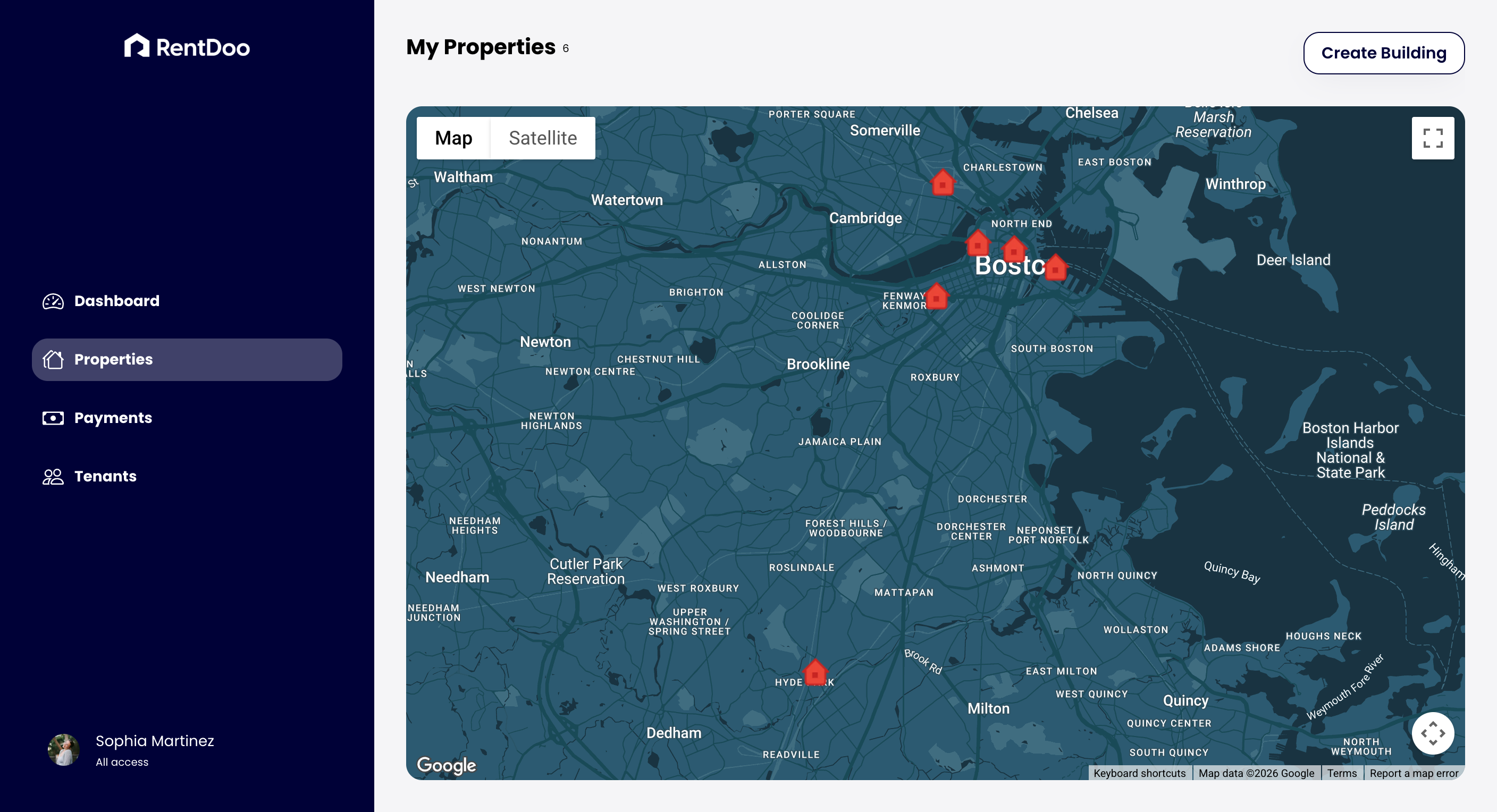
RentDoo gives landlords a centralized place to manage their rental properties, keep track of tenants, and monitor rent payments without maintaining a complicated collection of spreadsheets.
Instead of asking:
"Which spreadsheet has that information?"
You can simply look at your property management system.
Spreadsheets aren't bad.
They're actually excellent tools.
The problem starts when you're using them to manage a growing rental portfolio that has outgrown them.
If you're managing a few properties, a spreadsheet may be all you need.
If you're managing dozens of units and constantly updating multiple sheets just to understand what's happening with your properties, there may be a better way.
The goal isn't to eliminate spreadsheets.
It's to stop using them for things they're not designed to handle.
Manage your properties, tenants, and rent payments in one place with RentDoo.