Sonya R.
Content Manager
October 6, 2026
6 min
read


A rental property spreadsheet can be useful when you’re starting out. The mistake isn’t using a spreadsheet; it’s turning a simple list into an increasingly complicated system that nobody can confidently reconcile.
A good landlord spreadsheet should answer five questions:
This guide explains how to structure your workbook so it stays useful as your portfolio grows.
Don’t put your entire rental operation into one giant table. Separate different types of information so each sheet has a clear purpose.
Use one row per property.
Recommended columns include Property ID, Property Name, Address, Number of Units, and Status.
Property IDProperty NameAddressUnitsStatusP001Oak Street14 Oak St4ActiveP002River Road82 River Rd8Active
The Property ID matters because an address is a description, not a reliable database key. A unique identifier helps you connect properties to their units, leases, payments, and expenses without relying on names or addresses remaining unchanged.
Use one row per unit or lease record.
Include:
For example:
PropertyUnitTenantMonthly RentLease EndP0012AJordan Lee$1,65006/30/2027P0012BTaylor Reed$1,80003/31/2027
This table describes the lease. It should not serve as your payment history. Keeping lease information separate from transactions makes it easier to track changes, monitor expirations, and reconcile rent.
Record individual transactions instead of overwriting balances.
Suppose a tenant owes $1,800 and pays $1,000 on October 1, followed by $800 on October 8. Record both transactions separately.
DatePropertyUnitTenantAmountOct 1P0012AJordan Lee$1,000Oct 8P0012AJordan Lee$800
This preserves the actual payment history and makes partial payments easier to reconcile. It also gives you a reliable record of when money was received, rather than simply showing whether a balance has changed.
Record each expense separately, with a date, property, category, vendor, and amount.
DatePropertyCategoryVendorAmountOct 4P001PlumbingABC Plumbing$285Oct 7P001InsuranceXYZ Insurance$140
The IRS recommends maintaining records that identify rental income and expenses and support amounts reported on a tax return.
However, don’t assume that a spreadsheet category automatically determines tax treatment. Rental expenses, depreciation, and other tax rules require separate consideration based on the circumstances.
Your dashboard should be the summary layer of the workbook. It should calculate its figures from the underlying tables instead of becoming another place where numbers are entered manually.
Useful metrics include:
A useful dashboard should help you identify problems quickly, not just display attractive charts. Every figure should have a clear definition and a traceable source.
A spreadsheet can be perfectly reasonable for a small, uncomplicated rental portfolio.
It works particularly well when:
There is no universal unit count at which spreadsheets stop working.
A five-unit portfolio with several owners, frequent repairs, and complicated billing can create more administrative work than a 20-unit portfolio with straightforward leases.
The important question isn’t simply how many units you manage. It’s how much manual coordination is required to keep the records accurate.
Watch for these operational warning signs:
At that point, adding another formula may not solve the problem.
The underlying issue is that your information and workflows are disconnected. You may need a system that connects property records, tenant information, leases, payments, and maintenance in one place.
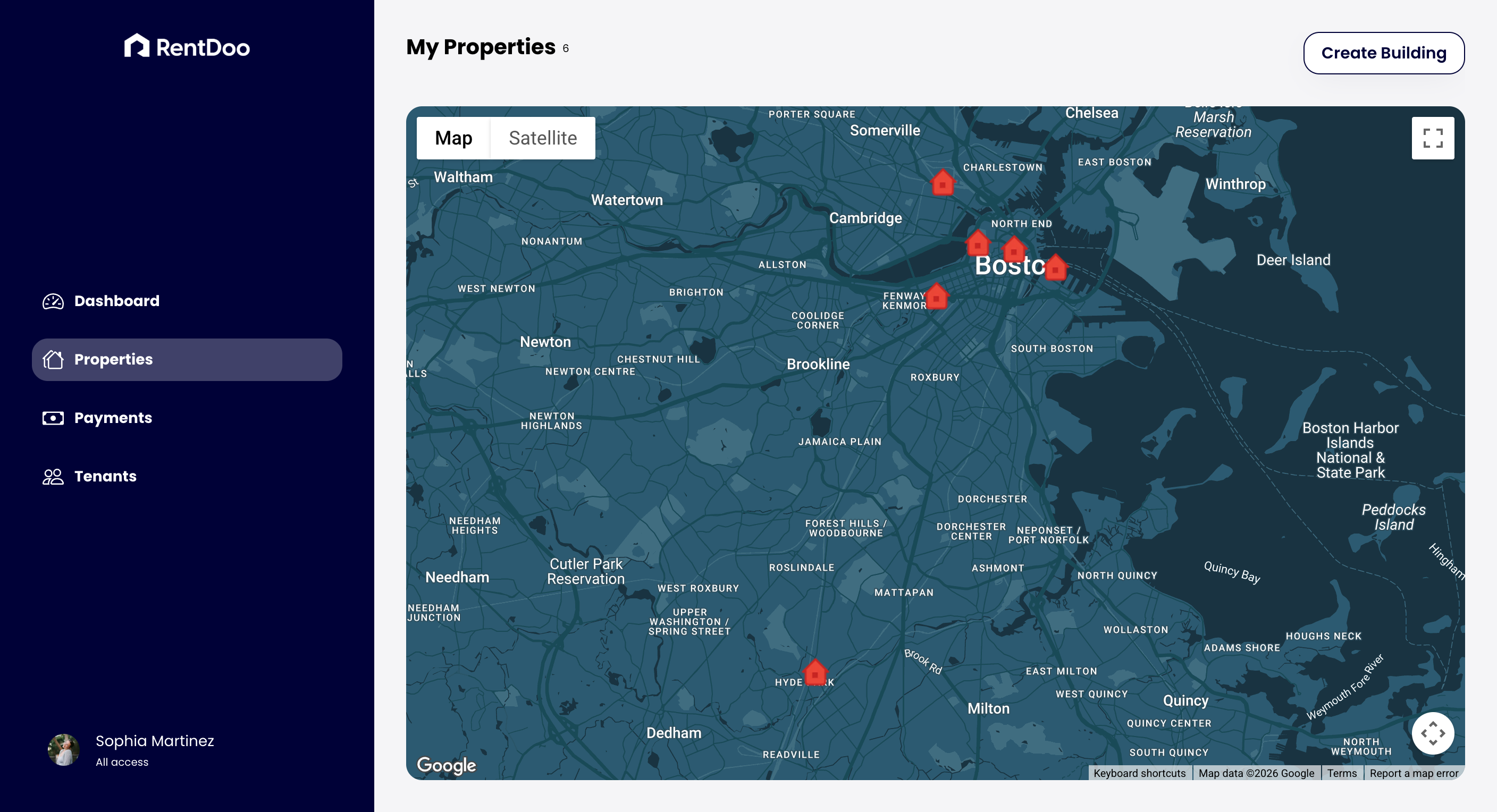
That’s the role RentDoo is designed to play: helping landlords manage property, tenant, lease, and rent information in one operational system instead of maintaining a collection of disconnected spreadsheets.
IRS — Rental Real Estate Income, Deductions and Recordkeeping
IRS Publication 527 — Residential Rental Property
https://www.irs.gov/publications/p527